
Employment Services Reform Explained: What We Know So Far
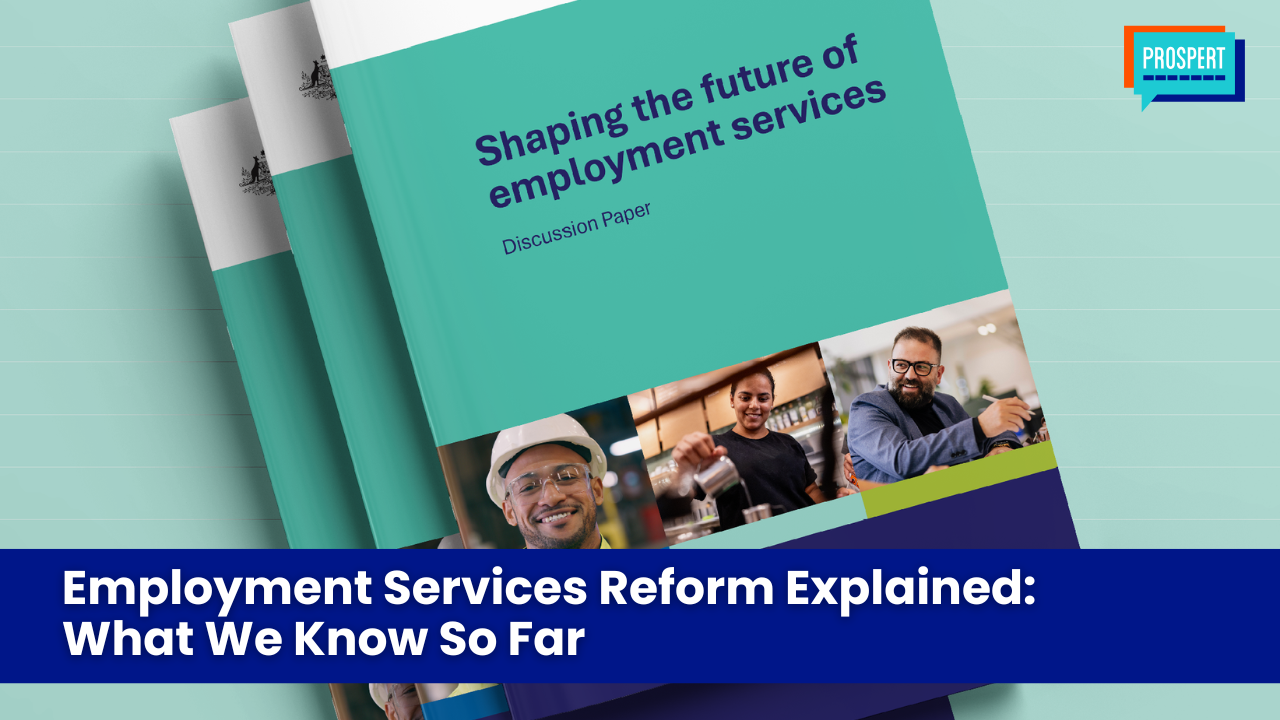
The Australian Government has released its discussion paper, Shaping the Future of Employment Services, outlining what could become the most significant reform of employment services in more than a decade.
While the reforms are still subject to consultation, the direction is becoming clear. The Australian Government is seeking to move away from a “one-size-fits-all” approach and create a system that better reflects the different needs of job seekers, employers and communities.
So, what is changing and why?
Why reform is on the agenda
According to the discussion paper, the current employment services system is not delivering the outcomes needed for many Australians.
While Workforce Australia has helped many people find work, the Government argues that the current model struggles to respond effectively to people with different levels of job readiness and different barriers to employment.
The paper highlights several concerns:
Too many people are being funnelled through the same service model regardless of their circumstances
Some job seekers receive more support than they need, while others receive too little
A growing number of people remain in employment services for extended periods
Employers report frustration with candidate matching and low engagement with the system
Current compliance and mutual obligation settings are often disconnected from the activities that genuinely help people move towards employment.
At the same time, Prospert’s work with providers shows there are many examples of tailored servicing, strong local partnerships and wraparound support already in place. These providers are often achieving strong outcomes with complex cohorts - however, these examples are are not yet consistent across the system.
The Government's view is that employment services need to become more personalised, more flexible and more closely connected to both employers and local communities.
In Prospert’s view, the reform process is, in many ways, about taking what already works in pockets of good practice and making it the norm rather than the exception.
A new three-stream model
At the centre of the proposed reforms is a new three-stream service model.
Stream 1: Online and brief intervention services
This stream would support people who are closest to the labour market and likely to find work with limited assistance.
Services would be delivered primarily through an enhanced digital platform supported by the Australian Public Service. Participants would receive targeted advice, career guidance and brief interventions designed to help them reconnect with employment quickly.
Stream 2: Targeted provider services
This stream would support people who need more assistance in finding work but remain relatively close to the labour market.
Participants would work with contracted providers who would deliver:
Job coaching
Employability support
Skills development
Connections to training
Assistance aligned to local labour market opportunities
The focus would be on helping people build capability and move into sustainable employment.
Stream 3: Intensive services
This is perhaps the most significant change.
The Government is proposing a new intensive service for people who are furthest from the labour market and face complex barriers to employment.
Support could include:
Mentoring
Work experience
Skills development
Volunteering opportunities
Connections to health, housing and community services
Social enterprise pathways
The discussion paper suggests these services may be delivered primarily by community-based organisations with strong local connections and experience supporting disadvantaged cohorts. Stream 3 providers will need to demonstrate integrated, joined‑up service models with other local health, housing and community services if they are to be competitive in the new intensive services contract
Other key reforms being proposed
The proposed reforms also include a new assessment process to better identify barriers to employment and connect people with the right level of support from the outset.
The aim is to ensure participants are referred to the most appropriate service and can move between streams if their circumstances change.
In addition, the current Job Plan would be replaced by an Employment Goal Plan. This would focus on a person's employment goals, barriers and agreed pathway towards work. The intention is to create a more meaningful and personalised approach to planning and service delivery.
Changes to mutual obligations
The Government is also proposing a new approach to mutual obligations. Rather than applying largely standardised requirements, obligations would be linked to a person's Employment Goal Plan and tailored to their distance from the labour market.
For people facing significant barriers, the emphasis would shift towards meaningful engagement and progression rather than compliance alone.
Meaningful engagement has always been central to Prospert’s approach. Our Meaningful Engagement Program is grounded in supporting organisations to build rapport with disadvantaged cohorts, develop people to build trust and dialogue with participants and adopt tools that support clear, shared goals.
Greater focus on employers
The discussion paper acknowledges that employer engagement remains a weakness of the current system.
Future reforms would seek to strengthen partnerships with industry, improve local employer engagement and provide more targeted support to employers seeking to recruit and retain workers.
Since Prospert was established, we have been advocating for effective employer engagement, both directly with providers and with the Government. We believe there remains a significant gap in this area, particularly relative to successful models internationally, and we continue to focus on creating an employment services system that is valued by employers.
New commissioning models
The Government is also signalling a different approach to commissioning services. While traditional employment services providers will continue to play an important role, there is a clear emphasis on increasing provider diversity and creating greater opportunities for community-based organisations, First Nations organisations and social enterprises.
With talk of relational contracting, this is likely to mean more collaborative, relationship based commissioning approaches, particularly for intensive services. This means the Government may focus on local connections, specialist expertise and the ability to work in partnership with other services, rather than just on scale and price.
What happens next?
The discussion paper is the beginning of this reform journey.
Consultation will continue throughout 2026, with feedback helping to shape the final design of the new employment services system.
Many details remain undecided, including assessment tools, funding models, provider incentives and commissioning arrangements.
However, the broad direction is clear. The Government is seeking to build a more personalised, community-connected and employer-focused employment services system that better reflects the different pathways people take towards work.
For providers, now is the time to start understanding what these reforms could mean and where opportunities may emerge as the new system takes shape.
Providers who start now – strengthening engagement capability, building local partnerships, and preparing their teams for a three‑stream world – will be better positioned to shape the reform rather than just respond to it.
If you’d like to explore how Prospert can support your organisation to prepare for the new employment services model – from frontline engagement to leadership and employer strategies – you can get in touch or follow us on LinkedIn to stay up to date as the reform unfolds.
Read the Government’s paper here: https://www.dewr.gov.au/employment-services-reform/shaping-future-employment-services-discussion-paper