
What Relational Case Management Looks Like In Practice
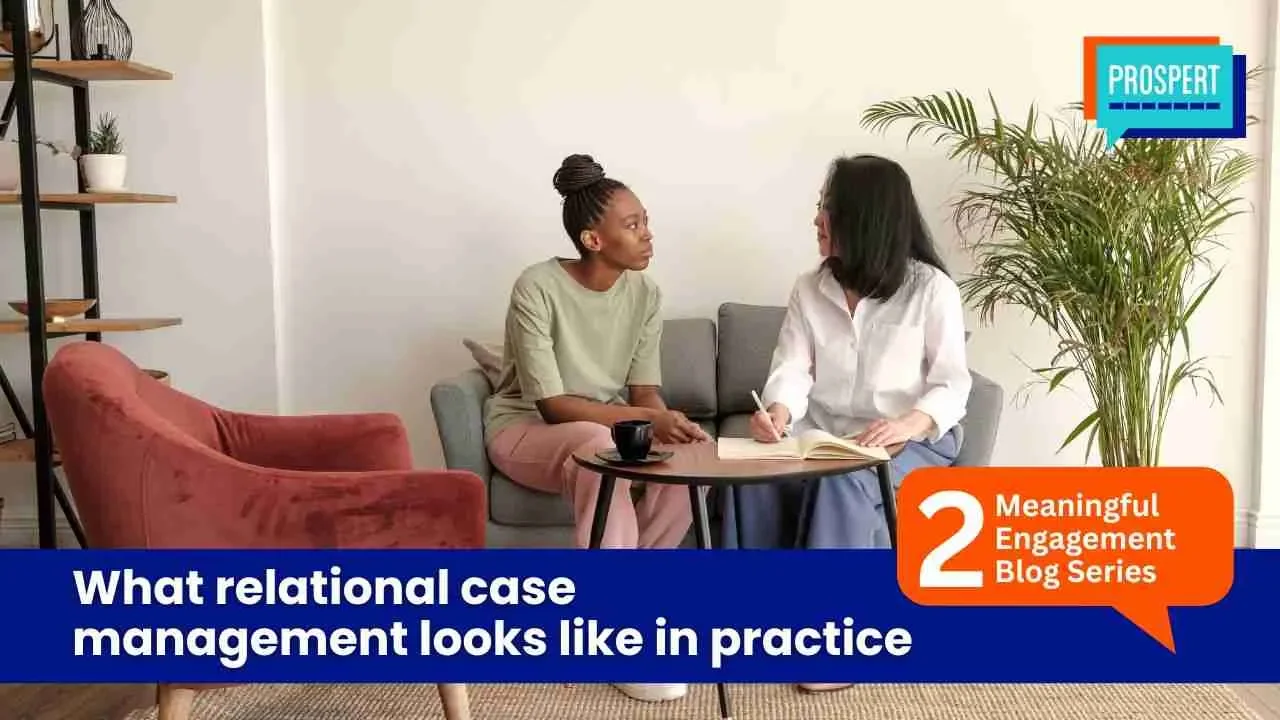
Employment services are shifting toward relationship-driven engagement, so what does that look like in practice?
For many employment consultants, relational engagement can sound abstract. But according to Prospert facilitator and researcher, Dr George Giuliani, it’s not about being softer. It’s about being more structured and intentional in how engagement happens.
“There are really three elements to this sort of work,” he says.
“First, creating connection. Second, clarity about who’s going to do what. And third, being clear about what the end goal is.”
These three elements form the foundation of relational case management, and they are increasingly relevant as compliance levers reduce and participant engagement becomes more central to performance.
1. Building connection
The first step is establishing a genuine connection with participants. This is not about lengthy conversations or informal chats. It is about creating enough trust for honest engagement.
George says this is often where engagement either begins or breaks down, particularly when working with participants who have disability or experience mental ill-health.
“It’s not about whether you care about the person you’re working with,” he says.
“It’s whether the person you’re working with believes that you care about what’s happening to them.”
This distinction matters. Consultants may genuinely want to help, but unless participants experience that support, engagement can remain superficial.
According to Peter Bacon, CEO of Disability Employment Australia, meaningful participant engagement is different for every participant.
“Meaningful engagement is where you work with the person you’re supporting to craft a plan, a journey, that is individual to them. The essence of person-centred approaches,” says Peter.
“It’s very helpful and positive that the participant’s early days on the (IEA) program are marked not by heavy-handed talk of compliance and mutual obligation, but instead are about support and aspirations,” he said.
Connection can be built through simple, practical steps. Asking about past experiences with employment services. Understanding what’s important to the participant. Finding shared ground where possible. These conversations help establish trust and create a foundation for the work ahead.
2. Creating clear agreements
Once a connection is established, the next step is to clarify expectations. This is where relational case management moves beyond being supportive and becomes structured. George explains that strong engagement relies on shared responsibility.
“It’s about developing agreements with the participants you’re working with,” he says.
“You work out together who’s going to do what, and what happens when things don’t go to plan.”
This might include:
How often participants will attend appointments
What actions they will take between meetings
How progress will be reviewed
What happens if agreed actions aren’t completed
Importantly, these agreements are developed collaboratively, rather than imposed. This fosters ownership and reduces the need for compliance-driven interactions. It also gives consultants permission to have more constructive conversations when engagement drops.
“You can say, we agreed that when things weren’t working, we’d talk about it,” George says.
“That gives you a much stronger foundation for the conversation.”
3. Defining a shared end goal
The third element is often overlooked. Moving beyond “getting a job” to understanding what employment means for the participant. George says many consultants focus on the job outcome itself, rather than what that outcome represents.
“A lot of consultants will say, my job is to help you get a job,” he says.
“But it’s much more than that. What will your life be like? What will change for you?”
For some participants, the goal might be financial independence. For others, stability, confidence or supporting family. These motivations can become powerful drivers of engagement, and when challenges arise, consultants can reconnect to these shared goals.
“You can come back to what they said mattered to them, and if that’s still what they want, then you keep working toward it together,” says George.
Moving from compliance to co-production
Together, these three elements shift engagement from something done to participants to something developed with them. George describes this as co-producing outcomes.
“It’s not something that you do to your job seeker,” he says.
“It’s something that you do with your job seeker together in a partnership.”
This approach is particularly important as performance frameworks increasingly focus on participant experience and long-term outcomes.
Relational case management helps build commitment, sustain engagement and support participants through setbacks. It also provides consultants with a clearer framework for navigating complex situations. As employment services continue to evolve, these skills are becoming increasingly important.
In the next blog, we explore why relational engagement is gaining traction across the sector, and what we’re seeing both in Australia and internationally.